- Client
- Carbon2Nature
- Sector
- Carbon & forest restoration
- Location
- El Bostal, Zamora, Spain
- Year
- 2025
Proving the biodiversity value of a 50-year forest carbon project in Spain
We set a biodiversity baseline for Carbon2Nature's El Bostal restoration project and designed a leaner programme to track gains alongside carbon.
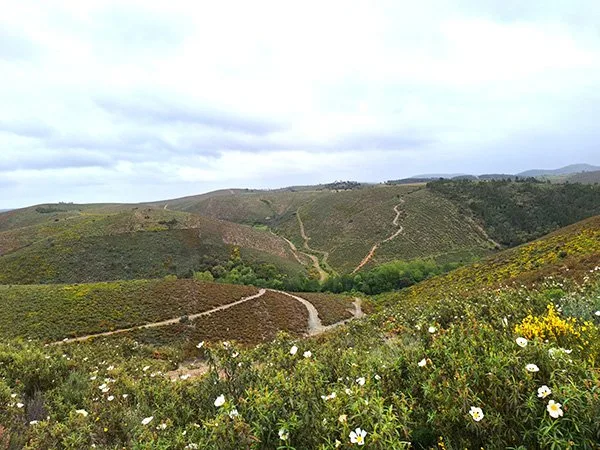
El Bostal, where fire-affected plantations are being restored to mixed native forest. © Okala
525 ha
of fire-affected forest under restoration
125
vertebrate species recorded
50 years
monitoring horizon
The challenge
Carbon2Nature is turning fire-affected conifer plantations near Trabazos, Zamora, into mixed native forest over 50 years. Carbon buyers increasingly expect evidence of wider nature benefits. Carbon2Nature needed a solid baseline and a monitoring approach it could afford to repeat for decades.
What we did
We deployed 24 camera traps, 12 acoustic recorders and six aquatic eDNA samples across the 525-hectare site. Data were processed by our AI pipeline and checked by ecologists, then analysed with diversity indices, Red List metrics and spatial models. We also assessed how much each method added for its cost.
The outcome
The baseline recorded 125 vertebrate species, including 24 mammals and 98 birds. Carbon2Nature has a credible baseline and evidence of which methods give the best value. Our recommendation is to repeat camera traps and acoustics at fixed sites every few years. This keeps long-term costs down while still evidencing biodiversity gains alongside carbon. NatureCube keeps each survey consistent across decades of monitoring, so the evidence stays comparable as the restoration progresses.