- Client
- Environment Bank
- Sector
- Habitat banking & nature recovery
- Location
- Castle Howard estate, North Yorkshire, England
- Year
- 2025
A species-level baseline for the Bog Hall Habitat Bank at Castle Howard
We went beyond habitat condition scores to record the birds, bats, mammals and soil life at the start of a 30-year habitat bank.
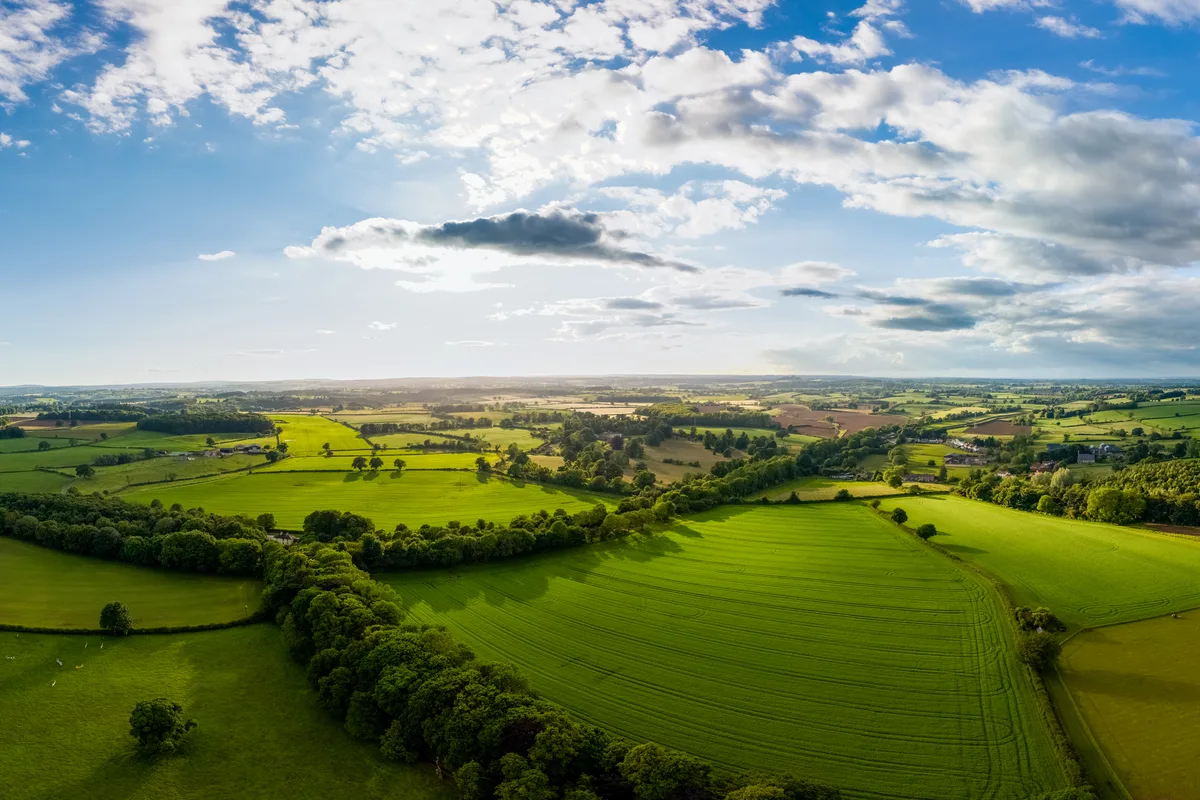
Lowland farmland and woodland in Yorkshire. © iStock
22
camera traps
18
bird and bat acoustic recorders
72
bird species recorded
The challenge
Environment Bank's Bog Hall Habitat Bank on the Castle Howard estate will be restored over 30 years. Habitat condition scores track vegetation, but say little about the species using the land or the health of its soils and water. Environment Bank wanted a species-level starting point to show real gains over time.
What we did
Between April and July 2025 we deployed 22 camera traps, 18 acoustic recorders (12 for birds and six for bats) and collected 11 eDNA samples from soil and water. Recordings were processed by our AI pipeline and verified by ecologists, eDNA was sequenced by Applied Genomics, and all results were uploaded to NatureCube. We modelled how species respond to tree height and vegetation greenness (NDVI).
The outcome
We recorded 72 bird species and seven mammal species, alongside soil and water eDNA. Environment Bank now has a species-level starting point for the habitat bank, covering wildlife as well as soil and water health. It can repeat the same methods to evidence real gains over the 30-year lifetime of the bank, and it has clear pointers on which habitats matter most for restoration. Holding every survey in NatureCube means future rounds of monitoring can be compared like for like over the bank's 30-year life.