- Client
- NatureLife Cambodia
- Sector
- Conservation NGO
- Location
- Lumphat Wildlife Sanctuary, Cambodia
- Year
- 2025
Turning a camera-trap survey into conservation priorities for Lumphat Wildlife Sanctuary
We turned NatureLife Cambodia's camera-trap survey into clear priorities for managing wildlife and strengthening future monitoring of endangered banteng.
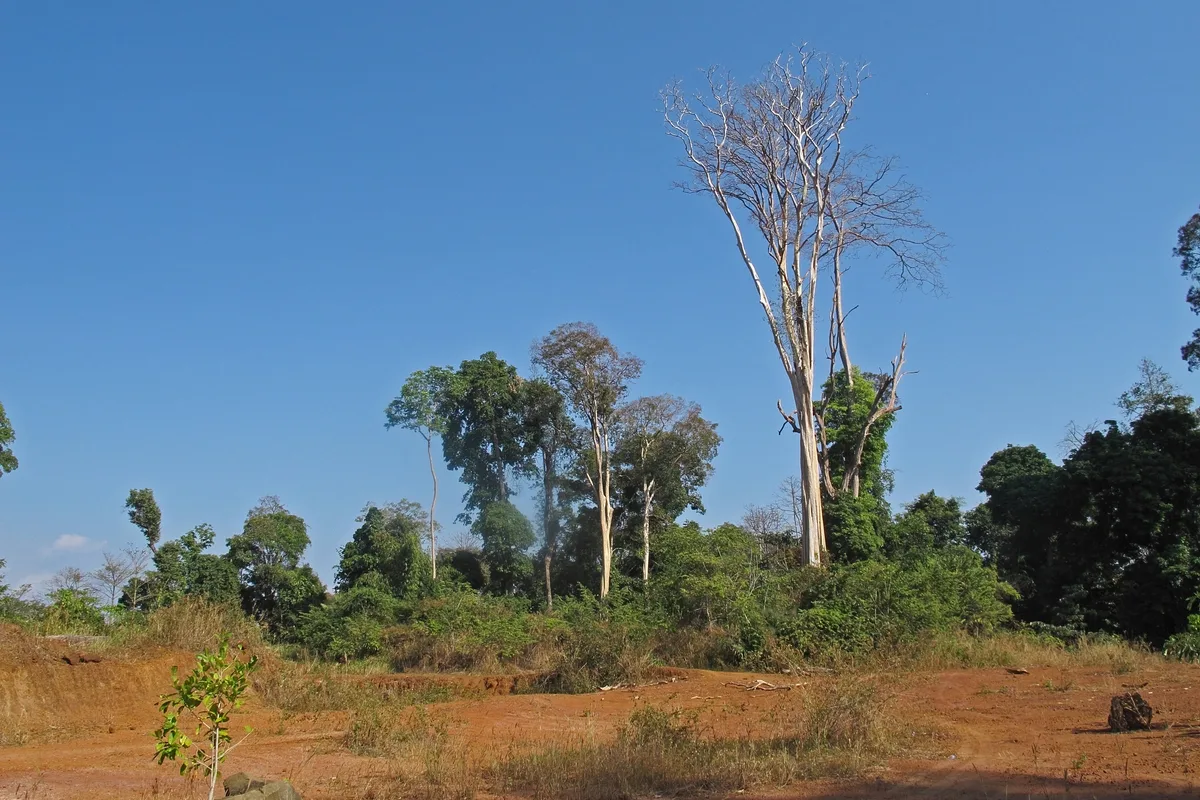
Dry forest and grassland in north-east Cambodia. © iStock
2,140
camera-trap days processed
100%
of AI identifications verified
25
species recorded
The challenge
Lumphat Wildlife Sanctuary is one of Cambodia's last strongholds for the endangered banteng. NatureLife Cambodia needed to know where wildlife and pressures occur across the sanctuary's mix of dry forest and grassland. It also needed to know whether its current survey could track banteng reliably.
What we did
We processed the camera-trap images through our AI pipeline and had every identification checked by ecologists. Results went onto NatureCube, where NatureLife's team can explore every verified record and see where species and pressures overlap. We produced species summaries and spatial models of habitat use for wild boar, sambar and domestic animals, and reviewed how well the survey design met its goals.
The outcome
The survey recorded 25 species. NatureLife now has verified species data, maps of where wildlife and human pressures overlap, and practical advice on how to redesign its camera grid so that the next survey can track banteng reliably. Its effort in the field will be better targeted as a result.